Green Tips for Home Renovation
Renovations can produce a great deal of waste if not handled properly. Here you can learn about the management issues you should consider, the availability of green building products, indoor air quality problems that might arise, how to reduce renovation waste and how to dispose of the remaining waste properly.
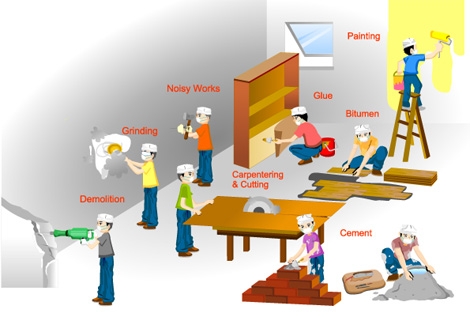
Managing Your Renovation
Home renovation can improve your living environment, but it can cause pollution and waste problems. That’s why it is very important to manage your renovation project carefully, taking into consideration what you need to do, how you will do it, how you will dispose of waste and how you will affect your family and neighbours. If you live in an apartment building you can seek help from the property management company to notify others of your intentions, and to help resolve any disputes. The property management company can also provide you with information on your rights and responsibilities during the renovation project.
More on what your property management company can doControlling Noise from Renovation Work
Noise from renovation work can cause annoyance to your neighbours. To minimise the disturbance, you should:
- Avoid carrying out renovation work before 9 am.
- Remind your contractor not to use powered mechanical equipment, carry out hammering or handle rubble between 7 pm to 7 am or at any time on public holidays.
Using Green Building Materials
Many conventional finishing materials, such as solvent-based paints, solvents and adhesives, contain high levels of volatile organic compounds (VOCs) which cause air pollution and smog having a significant adverse effect on human health. They are also smelly during the renovation process, which can be a problem for your neighbours. But you can avoid such situations by choosing to use water-based paints or paints with lower VOC content, and avoiding the use of adhesive-rich plywood.
Another way of using more environmentally friendly products is to purchase recycled materials. In Hong Kong, such materials are available for:
- Walls and partitions
- Carpets and other surfaces
- Benches
- Windows and doors
A list of recycled building materials, noting their specifications, supplier names and contact details, is available online.
More on reducing VOC emissionsMore on recycled building materialsMaintaining Indoor Air Quality (IAQ)
When you begin renovating, you should be aware of how your activities affect the IAQ for both you and your neighbours. Apart from volatile organic compounds, dust from polishing, sanding, cutting and grinding materials can be a problem. This can cause nasal and eye irritations, headaches, dizziness, nausea and even breathing problems. To avoid such problems, you should:
- Schedule the renovation work during periods when the fewest residents are at home.
- Identify areas that do not need extensive renovations.
- Isolate renovated areas from other areas by installing physical barriers to prevent dust from spreading.
- Ensure that you have adequate ventilation by opening windows and operating exhaust fans.
- Seal the inlets and outlets of air-conditioners to minimise the spread of dust and other contaminants.
When your renovation has been completed, you should:
- Ensure that the area is ventilated with fresh air well before you occupy it again.
- Air out any new furniture that might contain formaldehyde adhesives for at least several days before taking it indoors.
- Maintain good ventilation during the first few months of occupancy.
Waste Reduction during Renovation
You can reduce waste during the renovation process by:
- Reusing items such as hoardings, formwork and scaffolding, and recycling materials such as metal.
- Ordering the right amount of materials at the right time.
- Collecting small materials in suitable containers so you can locate them easily – this will both reduce wastage and save you money.
- Allocating a storage area for old materials that have been sorted, such as metal, concrete, timber, plastics, glass, excavated spoils, bricks and tiles.
- Giving your renovation contractor clear instructions on the separation and removal of construction waste.
- Delivering used items, such as electrical appliances and furniture, to recyclable outlets.
All sorted materials can then be recycled/disposed of as appropriate.
Waste reduction guidelinesMore on construction waste reductionOutlets for used itemsDisposing of Your Waste
When you are ready to dispose of the waste from your renovation, or have a contractor do it for you, be aware that you will be charged under the Construction Waste Disposal Charging Scheme. You or your contractor will need to open a billing account with the Environmental Protection Department before using Government waste disposal facilities. If you need to dispose of asbestos, it is a legal requirement that you must hire a registered asbestos consultant and contractor to do so, and give written notice to the Environmental Protection Department at least 28 days in advance.
More on the Construction Waste Disposal Charging SchemeMore on asbestos removalChoosing Energy Efficient Appliances
If you need to buy new domestic electrical and gas appliances after renovating you should look for those with energy labels. These labels tell you about energy consumption and efficiency, with highly efficient appliances allowing you to save on energy expenses, and to help save the environment.
More on the Voluntary Energy Efficiency Labelling SchemeMore on the Mandatory Energy Efficiency Labelling Scheme