Construction and Renovation Noise
Construction and renovation noise in a compact city like Hong Kong can be a significant problem. On this page you can learn about how the Environmental Protection Department is managing construction noise, the roles of construction noise permits and noise emission labels, a code of good practice to which the Department is encouraging adherence, and a pilot scheme on quiet renovation.
Construction Noise Management in Hong Kong
As in many densely populated cities around the world, noise is a significant environmental problem in Hong Kong. The small geographical size of the urban areas means that buildings are always very close to each other, and that commercial and residential premises are mixed together. So when new construction or renovations are underway, noise can be very disturbing. Since the Noise Control Ordinance came into effect in 1989, the Environmental Protection Department has worked to reduce this problem by carefully managing construction noise. The aim is to strike a balance between the needs of the construction industry and social harmony.
More on noise management measures throughout Hong KongText of the Noise Control OrdinanceQuieter Construction Methods
Hong Kong is characterized by its compact townscape, dynamic growth and large-scale infrastructure development. While many construction projects are fulfilling various planning and economic needs, they inevitably generate construction noise to the neighbourhood and very often the noise problems could only be mitigated through the use of quieter methods and equipment, as well as effective and innovative noise mitigation measures. EPD actively encourage wider adoption of quieter construction methods and use of quieter and more environmentally friendly construction equipment among builders.
Construction Noise Permits
Construction Noise is mainly controlled under a construction noise permit system. A construction noise permit must be obtained from the Environmental Protection Department for either of the following two situations:
- Using specified powered mechanical equipment or carrying out prescribed construction work in Designated Areas, or carrying out general construction work using powered mechanical equipment, from 7 pm to 7 am on weekdays, and any time on Sundays and public holidays.
- Carrying out percussive piling from 7 am to 7 pm on any day other than a public holiday.
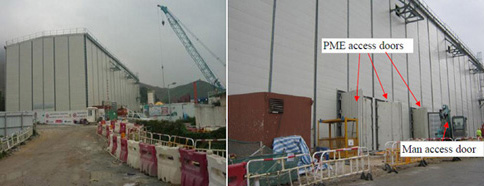
You should note that percussive piling is prohibited from 7 pm to 7 am on weekdays and any time on Sundays and public holidays. Applications for construction noise permits must be submitted to the Environmental Protection Department for assessment and approval before the commencement of the work. The respective application forms are available online, and can also be submitted electronically.
Construction Noise Permit application formsConstruction Noise Permit e-ApplicationNoise Emission Labels
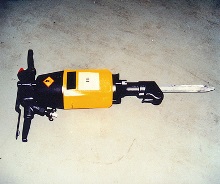 The Noise Control Ordinance also provides for the control of noise from hand-held percussive breakers and air compressors. Breakers that weigh more than 10 kilograms and air compressors that can supply compressed air at 500 kilopascals or above must be fitted with noise emission labels when being used for construction work. When applying for a noise emission label, you should provide:
- Supporting documents showing that the equipment complies with a standard that is substantially the same as or more stringent than that set out in Schedule 1 to the Noise Control (Air Compressors) Regulations or the Noise Control (Hand Held Percussive Breakers) Regulations when tested under conditions comparable to those set out in Schedule 2 to the respective Regulations. For example, EC Declaration of Conformity and relevant documentation under the Directive 2000/14/EC of the European Union; or
A noise testing report certifying compliance of noise emission standards issued by a corporate member of the Hong Kong Institute of Acoustics Limited; a professional member of Hong Kong Institute of Qualified Environmental Professionals Limited; or a registered professional engineer (as defined by section 2(1) of the Engineers Registration Ordinance) in the building services, environmental or mechanical discipline. - A trade leaflet or brochure for the equipment, if available.
- Other relevant information such as the equipment's date of manufacture.
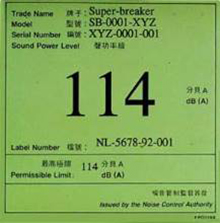
Application forms are available online and should be submitted at one of the Environmental Protection Department's Customer Service Counters. Applications can also be made online.
More on Noise Emission LabelsNoise Emission Label application formNoise Emission Label e-ApplicationCustomer Service Counter locationsPilot Scheme on Quiet Renovation
Large-scale public surveys revealed that domestic renovation is the most disturbing type of environmental noise. The major source of annoyance is the use of percussive tools such as electric breakers which often generate intrusive noise being transmitted through the concrete structure to many other residential flats of the same building.
We have embarked on a “Pilot Scheme on Quiet Renovation” since 2021 for promoting quiet renovation. A series of seminars and site demonstrations in 2022 and 2023 has been arranged for practitioners in the fields of property management and domestic renovation. Domestic estates are being engaged to participate in the Scheme which also includes the lending of hundreds of quiet tools for different types and applications in various renovation processes. Further details of this Scheme could be found in http://www.quietrenovation.com.
More on Quiet Construction MethodsMore on Quiet RenovationA Code of Practice
The Environmental Protection Department also published a Code of Practice to encourage the reduction of noise and implementation of good management practices within the construction industry. The primary aim of the Code is to support the senior management of construction firms in complying with the Noise Control Ordinance. The Code covers measures such as:
- Issuing policy statements on the prevention of noise pollution.
- Conducting systematic periodic reviews of practice.
- Appointing and empowering a senior management as a noise control officer.
- Establishing a notification system for construction noise incidents that have generated or may generate complaints.
The objective is to ensure that the need for a tranquil environment will be considered as part of the construction process.
More on the Code of Good Practice (pdf file)Further Enquiries
If you have further enquiries about the Construction Noise Permits or Noise Emission Labels applications, please contact Environmental Protection Department's Customer Service Centre at 2838 3111 or by email to enquiry@epd.gov.hk.